

 RSS
RSS Apple Podcasts
2 Kings 1-5: Healing A Man With No Faith
Podcast: Play in new window | Download
Today’s Bible Translation
Bible translation used in today’s episode: Ch. 1-2 CEB; Ch. 3-5 ESV
Associate Producer
Travis Blevins
Podcast Introduction
It’s History Tuesday. We’ll read 2 Kings 1-5. After which I’ll have some comments on what we’ve ready, plus we’ll talk about Holy Tuesday, the third day of Holy Week. I’m calling this episode “Healing A Man With No Faith.”
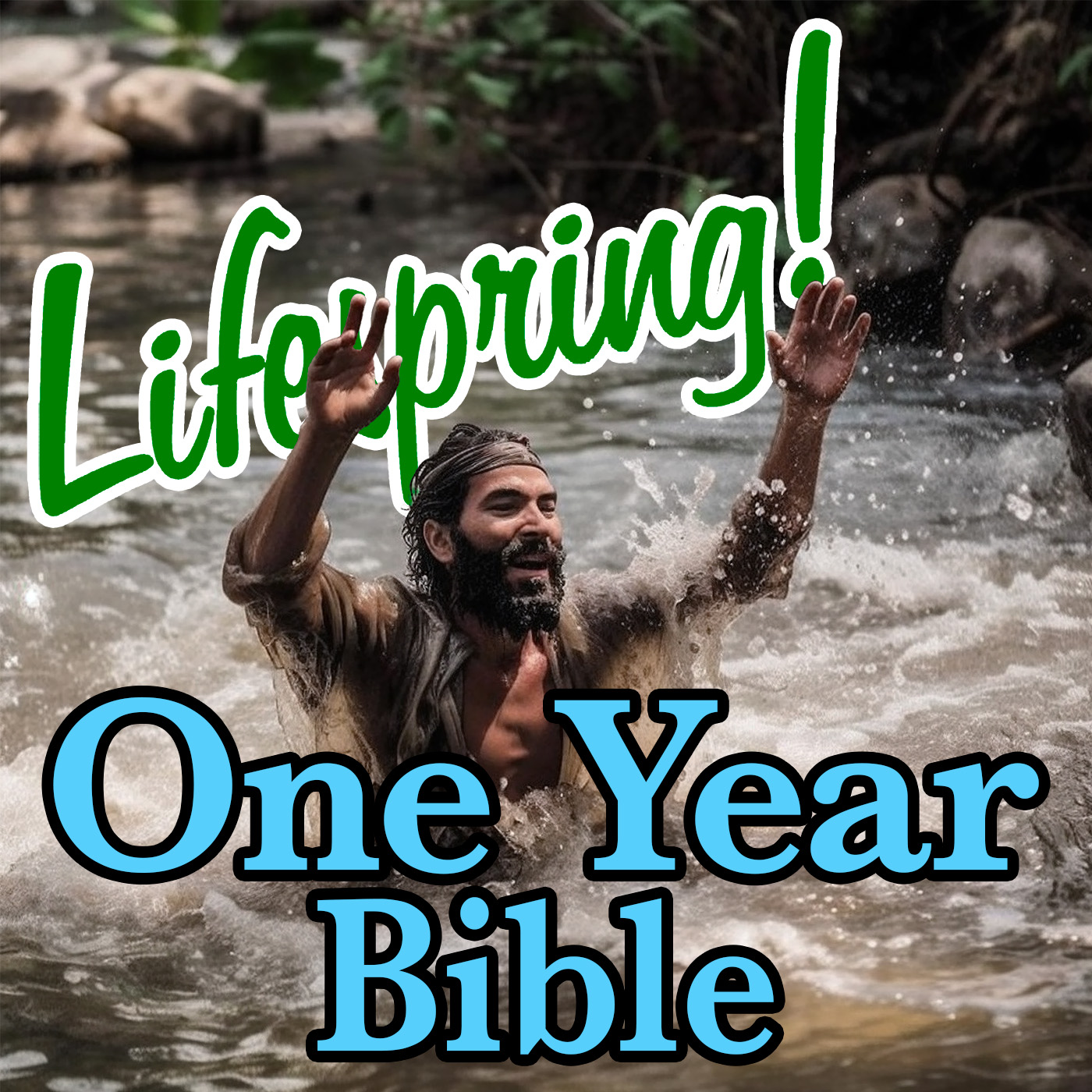
Comments on 2 Kings 5
So this Naaman was an important guy, commander of the army of Syria. Note that Syria is not part of the Promised Land, and the Syrians are not part of God’s chosen people. As a matter of fact, one of the key people in this chapter was a young girl that was from Israel that had been captured by the Syrians.
And this girl, when she became aware that Naaman had leprosy, told him that there was a prophet who could cure him. This prophet was Elisha. This girl had huge faith. Elisha had never healed anyone of leprosy, but her faith was great.
Now here is an important fact about faith. It is not something that comes from us. It is a gift of God. There are many scriptures that tell us this, but I’ll just give you one for now. Hebrews 12:2 says that He is the author and finisher of our faith. Whatever faith we have comes from Him.
So God gave this young girl the faith that would move Naaman to seek out Elisha. And what happened when Elisha first told Naaman how to receive his healing? Naaman rejected it! It seemed too easy! “What? Wash in the Jordan?!?”
Why did he discount the prescription? First off, he expected more of a production…he expected some sort of hocus pocus and arm waving. Secondly, the Jordan was seen by this Syrian as “less than” one of his own rivers from his home.
Naaman had no faith in the cure.
But his servants said, “Hey, why not try it? What have you got to lose? What if it works? Isn’t it worth a try?”
And you know what happened. He went in the Jordan and was cured.
He was cured not because of his faith, but because of the glory that would come to God.
Naaman declared that he now believed that the Lord was the only God. And he committed to worship and sacrifice to only the Lord. Think of it. This man who was very important, and had thousands of people under his leadership declared that the God of the Hebrews is the one and only God. How many other people were changed by that declaration we do not know, but God saw to it that His name became known to an entire nation. And He did that through the faith He gave to one young slave girl.
Support
This a value for value podcast. There are no advertisers because advertising=censorship. If you enjoy the Lifespring Family Audio Bible, decide how much value it brings to you. Only you can make that determination. Then put a number on the value and send it to me here: SUPPORT.
Transcript
Transcript corrected by Sister Denise
Steve Webb 0:00
What? Wash in the Jordan?
Steve Webb 0:10
It is the Lifespring! One Year Bible coming to you from Riverside, California, and podcasting since 2004, I’m your OG Godcaster, Steve Webb. This is the daily podcast where we’re reading through the entire Bible in a year and it’s History Tuesday. We’re going to read 2 Kings 1 through 5, after which I’ll have some comments on what we’ve read. Plus, we’ll talk about Holy Tuesday, the third day of Holy Week. I’m calling this episode “Healing a Man With No Faith.” Let’s get started with a word of prayer. Our gracious heavenly Father, we thank you for this time together. And I pray that as we read today, you would teach us. Show us something, Lord, that we can use in our lives today. I pray this in Jesus’ name. Amen. Okay, are you ready? Let’s begin.
Steve Webb 0:59
2 Kings, chapter 1. After Ahab died, Moab rebelled against Israel. Ahaziah fell out the window of his second-story room in Samaria and was hurt. He sent messengers, telling them, “Go to Ekron’s god Baal-zebub, and ask if I will recover from this injury.” But the LORD’s messenger said to Elijah from Tishbe, “Go, intercept the messengers of Samaria’s king, and ask them, ‘Is it because there’s no God in Israel that you are going to question Ekron’s god Baal-zebub? This is what the LORD says: You will never get out of the bed you are lying in; you will die for sure!’” So Elijah set off. The messengers returned to Ahaziah. He said to them, “Why have you come back?” They said to him, “A man met us and said, ‘Go back to the king who sent you. Say to him, This is what the LORD says: Is it because there’s no God in Israel that you’ve come to question Ekron’s god Baal-zebub? Because of this, you will never get out of the bed you are lying in; you will die for sure!’” Ahaziah said to them, “Describe the man who met you and said these things.” They said to him, “He wore clothes made of hair with a leather belt around his waist.” Ahaziah said, “That was Elijah from Tishbe.” So Ahaziah sent out a commander with fifty soldiers. The commander met up with Elijah while he was sitting on a hilltop. The commander said, “Man of God, the king says, ‘Come down!’” Elijah replied to the commander of the fifty soldiers, “If I really am a man of God, may fire come down from the sky and burn up you and your fifty soldiers.” Then fire came down from the sky and burned up the commander and his fifty soldiers. Ahaziah then sent another commander with fifty soldiers. The commander said to Elijah, “Man of God, this is what the king says: ‘Hurry and come down!’” Elijah said to them, “If I really am a man of God, may fire come down from the sky and burn up you and your fifty soldiers.” Then God’s fire came down from the sky and burned up the commander and his fifty soldiers. For a third time Ahaziah sent a commander with fifty soldiers. So the third commander arrived. He kneeled before Elijah and begged him, “Man of God! Please have some regard for my life and the lives of these fifty soldiers who are your servants. Look, fire came from the sky and burned up the two earlier commanders and their troops of fifty soldiers. Please have regard for my life.” Then the LORD’s messenger said to Elijah, “Go down with him. Don’t be afraid of him.” So Elijah set out to go with him to the king. Elijah said to the king: “This is what the LORD says: Why did you send messengers to question Ekron’s god Baal-zebub? Is there no God in Israel whose word you could seek? Because of this, you won’t ever get out of the bed you are lying in; you’ll die for sure!” So Ahaziah died in agreement with the LORD’s word that Elijah had spoken. Because Ahaziah had no son, Joram became king after him in the second year of Judah’s King Jehoram, who was Jehoshaphat’s son. The rest of Ahaziah’s deeds, aren’t they written in the official records of Israel’s kings?
Steve Webb 4:16
2 Kings, chapter 2. Now the LORD was going to take Elijah up to heaven in a windstorm, and Elijah and Elisha were leaving Gilgal. Elijah said to Elisha, “Stay here, because the LORD has sent me to Bethel.” But Elisha said, “As the LORD lives and as you live, I won’t leave you.” So they went down to Bethel. The group of prophets from Bethel came out to Elisha. These prophets said to Elisha, “Do you know that the LORD is going to take your master away from you today?” Elisha said, “Yes, I know. Don’t talk about it!” Elijah said, “Elisha, stay here, because the LORD has sent me to Jericho.” But Elisha said, “As the LORD lives and as you live, I won’t leave you.” So they went to Jericho. The group of prophets from Jericho approached Elisha and said to him, “Do you know that the LORD is going to take your master away from you today?” He said, “Yes, I know. Don’t talk about it!” Elijah said to Elisha, “Stay here, because the LORD has sent me to the Jordan.” But Elisha said, “As the LORD lives and as you live, I won’t leave you.” So both of them went on together. Fifty members from the group of prophets also went along, but they stood at a distance. Both Elijah and Elisha stood beside the Jordan River. Elijah then took off his coat, rolled it up, and hit the water. Then the water was divided in two! Both of them crossed over on dry ground. When they had crossed, Elijah said to Elisha, “What do you want me to do for you before I’m taken away from you?” Elisha said, “Let me have twice your spirit.” Elijah said, “You’ve made a difficult request. If you can see me when I’m taken from you, then it will be yours. If you don’t see me, it won’t happen.” They were walking along, talking, when suddenly a fiery chariot and fiery horses appeared and separated the two of them. Then Elijah went to heaven in a windstorm. Elisha was watching, and he cried out, “Oh, my father, my father! Israel’s chariots and its riders!” When he could no longer see him, Elisha took hold of his clothes and ripped them in two. Then Elisha picked up the coat that had fallen from Elijah. He went back and stood beside the banks of the Jordan River. He took the coat that had fallen from Elijah and hit the water. He said, “Where is the LORD, Elijah’s God?” And when he hit the water, it divided in two! Then Elisha crossed over. The group of prophets from Jericho saw him from a distance. They said, “Elijah’s spirit has settled on Elisha!” So they came out to meet him, bowing down before him. “Look,” they told him, “there are fifty strong men among us, your servants. Please let them go and search for your master. Perhaps the LORD’s spirit has picked him up and put him down on some mountain or in some valley.” Elisha said, “Don’t send them.” They insisted until he became embarrassed and said, “Okay, send them.” So they sent fifty men who searched for three days. But they couldn’t find Elijah. When these men returned to Elisha, who was staying in Jericho, he said to them, “Didn’t I tell you not to go?” The citizens said to Elisha, “As you can see, sir, this city is in a good location, but the water is bad, and the land causes miscarriages.” He said, “Bring me a new bowl, and put some salt in it.” They did so. Elisha then went out and threw salt into the spring. He said, “This is what the LORD has said: I have purified this water. It will no longer cause death and miscarriage.” The water has stayed pure right up to this very day, in agreement with the word that Elisha spoke. Elisha went up from there to Bethel. As he was going up the road, some young people came out of the city. They mocked him: “Get going, Baldy! Get going, Baldy!” Turning around, Elisha looked at them and cursed them in the LORD’s name. Then two bears came out of the woods and mangled forty-two of the youths. From there Elisha went to Mount Carmel and then back to Samaria.
Steve Webb 8:32
2 Kings, chapter 3. In the eighteenth year of Jehoshaphat king of Judah, Jehoram the son of Ahab became king over Israel in Samaria, and he reigned twelve years. He did what was evil in the sight of the Lord, though not like his father and mother, for he put away the pillar of Baal that his father had made. Nevertheless, he clung to the sin of Jeroboam the son of Nebat, which he made Israel to sin; he did not depart from it. Now Mesha king of Moab was a sheep breeder, and he had to deliver to the king of Israel 100,000 lambs and the wool of 100,000 rams. But when Ahab died, the king of Moab rebelled against the king of Israel. So King Jehoram marched out of Samaria at that time and mustered all Israel. And he went and sent word to Jehoshaphat king of Judah: “The king of Moab has rebelled against me. Will you go with me to battle against Moab?” And he said, “I will go. I am as you are, my people as your people, my horses as your horses.” Then he said, “By which way shall we march?” Jehoram answered, “By the way of the wilderness of Edom.” So the king of Israel went with the king of Judah and the king of Edom. And when they had made a circuitous march of seven days, there was no water for the army or for the animals that followed them. Then the king of Israel said, “Alas! The Lord has called these three kings to give them into the hand of Moab.” And Jehoshaphat said, “Is there no prophet of the Lord here, through whom we may inquire of the Lord?” Then one of the king of Israel’s servants answered, “Elisha the son of Shaphat is here, who poured water on the hands of Elijah.” And Jehoshaphat said, “The word of the Lord is with him.” So the king of Israel and Jehoshaphat and the king of Edom went down to him. And Elisha said to the king of Israel, “What have I to do with you? Go to the prophets of your father and to the prophets of your mother.” But the king of Israel said to him, “No; it is the Lord who has called these three kings to give them into the hand of Moab.” And Elisha said, “As the Lord of hosts lives, before whom I stand, were it not that I have regard for Jehoshaphat the king of Judah, I would neither look at you nor see you. But now bring me a musician.” And when the musician played, the hand of the Lord came upon him. And he said, “Thus says the Lord, ‘I will make this dry streambed full of pools.’ For thus says the Lord, ‘You shall not see wind or rain, but that streambed shall be filled with water, so that you shall drink, you, your livestock, and your animals.’ This is a light thing in the sight of the Lord. He will also give the Moabites into your hand, and you shall attack every fortified city and every choice city, and shall fell every good tree and stop up all springs of water and ruin every good piece of land with stones.” The next morning, about the time of offering the sacrifice, behold, water came from the direction of Edom, till the country was filled with water. When all the Moabites heard that the kings had come up to fight against them, all who were able to put on armor, from the youngest to the oldest, were called out and were drawn up at the border. And when they rose early in the morning and the sun shone on the water, the Moabites saw the water opposite them as red as blood. And they said, “This is blood; the kings have surely fought together and struck one another down. Now then, Moab, to the spoil!” But when they came to the camp of Israel, the Israelites rose and struck the Moabites, till they fled before them. And they went forward, striking the Moabites as they went. And they overthrew the cities, and on every good piece of land every man threw a stone until it was covered. They stopped every spring of water and felled all the good trees, till only its stones were left in Kir-hareseth, and the slingers surrounded and attacked it. When the king of Moab saw that the battle was going against him, he took with him 700 swordsmen to break through, opposite the king of Edom, but they could not. Then he took his oldest son who was to reign in his place and offered him for a burnt offering on the wall. And there came great wrath against Israel. And they withdrew from him and returned to their own land.
Steve Webb 12:55
2 Kings, chapter 4. Now the wife of one of the sons of the prophets cried to Elisha, “Your servant my husband is dead, and you know that your servant feared the Lord, but the creditor has come to take my two children to be his slaves.” And Elisha said to her, “What shall I do for you? Tell me; what have you in the house?” And she said, “Your servant has nothing in the house except a jar of oil.” Then he said, “Go outside, borrow vessels from all your neighbors, empty vessels and not too few. Then go in and shut the door behind yourself and your sons and pour into all these vessels. And when one is full, set it aside.” So she went from him and shut the door behind herself and her sons. And as she poured they brought the vessels to her. When the vessels were full, she said to her son, “Bring me another vessel.” And he said to her, “There is not another.” Then the oil stopped flowing. She came and told the man of God, and he said, “Go, sell the oil and pay your debts, and you and your sons can live on the rest.” One day Elisha went on to Shunem, where a wealthy woman lived, who urged him to eat some food. So whenever he passed that way, he would turn in there to eat food. And she said to her husband, “Behold now, I know that this is a holy man of God who is continually passing our way. Let us make a small room on the roof with walls and put there for him a bed, a table, a chair, and a lamp, so that whenever he comes to us, he can go in there.” One day he came there, and he turned into the chamber and rested there. And he said to Gehazi his servant, “Call this Shunammite.” When he had called her, she stood before him. And he said to him, “Say now to her, ‘See, you have taken all this trouble for us; what is to be done for you? Would you have a word spoken on your behalf to the king or to the commander of the army?’” She answered, “I dwell among my own people.” And he said, “What then is to be done for her?” Gehazi answered, “Well, she has no son, and her husband is old.” He said, “Call her.” And when he had called her, she stood in the doorway. And he said, “At this season, about this time next year, you shall embrace a son.” And she said, “No, my Lord, O man of God; do not lie to your servant.” But the woman conceived, and she bore a son about that time the following spring, as Elisha had said to her. When the child had grown, he went out one day to his father among the reapers. And he said to his father, “Oh, my head, my head!” The father said to his servant, “Carry him to his mother.” And when he had lifted him and brought him to his mother, the child sat on her lap till noon, and then he died. And she went up and laid him on the bed of the man of God and shut the door behind him and went out. Then she called to her husband and said, “Send me one of the servants and one of the donkeys, that I may quickly go to the man of God and come back again.” And he said, “Why will you go to him today? It is neither new moon nor Sabbath.” She said, “All is well.” Then she saddled the donkey, and she said to her servant, “Urge the animal on; do not slacken the pace for me unless I tell you.” So she set out and came to the man of God at Mount Carmel. When the man of God saw her coming, he said to Gehazi his servant, “Look, there is the Shunammite. Run at once to meet her and say to her, ‘Is all well with you? Is all well with your husband? Is all well with the child?’” And she answered, “All is well.” And when she came to the mountain to the man of God, she caught hold of his feet. And Gehazi came to push her away. But the man of God said, “Leave her alone, for she is in bitter distress, and the Lord has hidden it from me and has not told me.” Then she said, “Did I ask my Lord for a son? Did I not say, ‘Do not deceive me?’” He said to Gehazi, “Tie up your garment and take my staff in your hand and go. If you meet anyone, do not greet him, and if anyone greets you, do not reply. And lay my staff on the face of the child.” Then the mother of the child said, “As the Lord lives and as you yourself live, I will not leave you.” So he arose and followed her. Gehazi went on ahead and laid the staff on the face of the child, but there was no sound or sign of life. Therefore he returned to meet him and told him, “The child has not awakened.” When Elisha came into the house, he saw the child lying dead on his bed. So he went in and shut the door behind the two of them and prayed to the Lord. Then he went up and lay on the child, putting his mouth on his mouth, his eyes on his eyes, and his hands on his hands. And as he stretched himself upon him, the flesh of the child became warm. Then he got up again and walked once back and forth in the house, and went up and stretched himself upon him. The child sneezed seven times, and the child opened his eyes. Then he summoned Gehazi and said, “Call this Shunammite.” So he called her. And when she came to him, he said, “Pick up your son.” She came and fell at his feet, bowing to the ground. Then she picked up her son and went out. And Elisha came again to Gilgal when there was a famine in the land. And as the sons of the prophets were sitting before him, he said to his servant, “Set on the large pot, and boil stew for the sons of the prophets.” One of them went out into the field to gather herbs, and found a wild vine and gathered from it his lap full of wild gourds, and came and cut them up into the pot of stew, not knowing what they were. And they poured out some for the men to eat. But while they were eating of the stew, they cried out, “O man of God, there is death in the pot!” And they could not eat it. He said, “Then bring flour.” And he threw it into the pot and said, “Pour some out for the men, that they may eat.” And there was no harm in the pot. A man came from Baal-shalishah, bringing the man of God bread of the firstfruits, twenty loaves of barley and fresh ears of grain in his sack. And Elisha said, “Give to the men, that they may eat.” But his servant said, “How can I set this before a hundred men?” So he repeated, “Give them to the men, that they may eat, for thus says the Lord, ‘They shall eat and have some left.’” So he set it before them. And they ate and had some left, according to the word of the Lord.
Steve Webb 19:27
2 Kings, chapter 5. Naaman, commander of the army of the king of Syria, was a great man with his master and in high favor, because by him the Lord had given victory to Syria. He was a mighty man of valor, but he was a leper. Now the Syrians on one of their raids had carried off a little girl from the land of Israel, and she worked in the service of Naaman’s wife. She said to her mistress, “Would that my Lord were with the prophet who is in Samaria! He would cure him of his leprosy.” So Naaman went in and told his Lord, “Thus and so spoke the girl from the land of Israel.” And the king of Syria said, “Go now, and I will send a letter to the king of Israel.” So he went, taking with him ten talents of silver, six thousand shekels of gold, and ten changes of clothing. And he brought the letter to the king of Israel, which read, “When this letter reaches you, know that I have sent to you Naaman my servant, that you may cure him of his leprosy.” And when the king of Israel read the letter, he tore his clothes and said, “Am I God, to kill and to make alive, that this man sends word to me to cure a man of his leprosy? Only consider, and see how he is seeking a quarrel with me.” But when Elisha the man of God heard that the king of Israel had torn his clothes, he sent to the king, saying, “Why have you torn your clothes? Let him come now to me, that he may know that there is a prophet in Israel.” So Naaman came with his horses and chariots and stood at the door of Elisha’s house. And Elisha sent a messenger to him, saying, “Go and wash in the Jordan seven times, and your flesh shall be restored, and you shall be clean.” But Naaman was angry and went away, saying, “Behold, I thought that he would surely come out to me and stand and call upon the name of the Lord his God, and wave his hand over the place and cure the leper. Are not Abana and Pharpar, the rivers of Damascus, better than all the waters of Israel? Could I not wash in them and be clean?” So he turned and went away in a rage. But his servants came near and said to him, “My father, it is a great word the prophet has spoken to you; will you not do it? Has he actually said to you, ‘Wash, and be clean’?” So he went down and dipped himself seven times in the Jordan, according to the word of the man of God, and his flesh was restored like the flesh of a little child, and he was clean. Then he returned to the man of God, he and all his company, and he came and stood before him. And he said, “Behold, I know that there is no God in all the earth but in Israel; so accept now a present from your servant.” But he said, “As the Lord lives, before whom I stand, I will receive none.” And he urged him to take it, but he refused. Then Naaman said, “If not, please let there be given to your servant two mule loads of earth, for from now on your servant will not offer burnt offering or sacrifice to any god but the Lord. In this matter may the Lord pardon your servant: when my master goes into the house of Rimmon to worship there, leaning on my arm, and I bow myself in the house of Rimmon, when I bow myself in the house of Rimmon, the Lord pardon your servant in this matter.” He said to him, “Go in peace.” But when Naaman had gone from him a short distance, Gehazi, the servant of Elisha the man of God, said, “See, my master has spared this Naaman the Syrian, in not accepting from his hand what he brought. As the Lord lives, I will run after him and get something from him.” So Gehazi followed Naaman. And when Naaman saw someone running after him, he got down from the chariot to meet him and said, “Is all well?” And he said, “All is well. My master has sent me to say, ‘There have just now come to me from the hill country of Ephraim two young men of the sons of the prophets. Please give them a talent of silver and two changes of clothing.’” And Naaman said, “Be pleased to accept two talents.” And he urged him and tied up two talents of silver in two bags, with two changes of clothing, and laid them on two of his servants. And they carried them before Gehazi. And when he came to the hill, he took them from their hand and put them in the house, and he sent the men away, and they departed. He went in and stood before his master, and Elisha said to him, “Where have you been, Gehazi?” And he said, “Your servant went nowhere.” But he said to him, “Did not my heart go when the man turned from his chariot to meet you? Was it a time to accept money and garments, olive orchards and vineyards, sheep and oxen, male servants and female servants? Therefore the leprosy of Naaman shall cling to you and to your descendants forever.” So he went out from his presence a leper, like snow.
Steve Webb 24:12
Well, Naaman was an important guy in chapter 5. He was the commander of the army of Syria. Now Syria is not part of the Promised Land and the Syrians are not part of God’s Chosen People. And as a matter of fact, one of the key people in this chapter was a young girl that was from Israel that had been captured by the Syrians. And this girl when she became aware that Naaman had leprosy, told him that there was a prophet who could cure him. The prophet was Elisha. This girl had huge faith. Elisha had never healed anyone of leprosy, but her faith was great. Now, here’s an important fact about faith. It’s not something that comes from us. It’s a gift from God. There are several scriptures that talk about this, but I’ll give you just one for right now. Hebrews 12:2 says that God is the author and finisher of our faith. Whatever faith we have comes from him. So God gave this young girl the faith that would move Naaman to seek out Elisha. Do you remember what happened when Elisha first told Naaman how to receive his healing? He rejected it. It seemed too easy. What? Wash in the Jordan? It can’t be that easy. So he rejected the prescription first because he expected more of a production. He expected some sort of hocus pocus and arm waving. And secondly, the Jordan was seen by this Syrian as less than one of his own rivers from his home. Naaman had no faith in the cure. But his servant said, “Hey, why not try it? What have you got to lose? What if it works? Isn’t it worth a try?” And of course, you know what happened, he went into the Jordan and he was cured. Now he was cured not because of his faith, but because of the glory that would come to God. Naaman declared that he now believed that the Lord was the only God. And he committed to worship and sacrifice to only the Lord. Think of it. This man who was very important, and had thousands of people under his leadership, declared that the God of the Hebrews is the one and only God. How many other people were changed by that declaration? We don’t know. But God saw to it that his name became known to an entire nation. And he did that through the faith he gave to that one young slave girl. What will God accomplish through you? You don’t need a pulpit. You don’t need a degree or a prestigious job or ten thousand followers on social media. All you need is the faith God gave you and the willingness to speak when he prompts you. Who knows what will happen? You have a comment or questions? Call the Lifespring Family Hotline at +1-951-732-8511. Or go to comment.lifespringmedia.com, or put a comment in a boostagram and send that off to me. Tomorrow will be Psalms Wednesday, and we’ll read chapters 78 through 80. Also, we’ll have a time of prayer. So if you have a praise or a prayer request, be sure to call it in at that number I just gave you or go to prayer.lifespringmedia.com. Plus we’ll talk about the fourth day of Holy Week called Spy Wednesday. Now, what’s that all about? 0-0-7? Well, you’ll have to be here to find out.
Steve Webb 27:29
Today’s Associate Producer is Travis Blevins, who came in with his monthly $20 donation. Thank you, Travis and God bless you. And also Lifespring Family Berean Brother Sean of San Pedro sent his 5000 sat Loaves and Fishes boost in. Thank you, Brother Sean, God bless you.
Jingle 27:48
lifespringmedia.com/support
Steve Webb 28:00
Today is Holy Tuesday and each day from now to Resurrection Sunday I’ll talk about the events of each day of the final week of Jesus’ life prior to and including his crucifixion and resurrection. Also, we have to remember that the events in the Gospels were not necessarily recorded in chronological order. However, some denominations and church traditions have assigned the events of Jesus last week to certain days. So this was a busy day for Jesus. He knew that his time was drawing short, and he knew that the religious establishment was looking for a way to get rid of him. Even still, he had some choice words for them, and he still had some teaching to do. So he went to the temple on this day. And as he was teaching, the chief priests and elders posed several questions to him in an attempt to entrap him. They asked him about marriage in heaven. They asked about whether it was right to pay taxes to Caesar and where did his authority come from anyway? And at one point, one of them asked Jesus which was the most important commandment to which he replied, “You must love the Lord your God with all your heart, all your soul, and all your mind. This,” he said, “is the first and greatest commandment.” And then he gave them a bonus. He said, “A second is equally important. ‘Love your neighbor as yourself.’ The entire law and all the demands of the prophets are based on these two commandments.” And while he was there in the temple, at one point, he had some very strong words for these so-called teachers of the law. In Matthew 23, he spoke seven woes or sorrows against them. He called them hypocrites multiple times. And at one point, he said, “For you are like whitewashed tombs, beautiful on the outside, but filled on the inside with dead people’s bones and all sorts of impurity. Outwardly you look like religious people, but inwardly your hearts are filled with hypocrisy and lawlessness.” Now contrast the way Jesus spoke to these people with the way he spoke to, “sinners.” How did he speak to the woman at the well? How did he speak to the woman caught in the act of adultery? How did he speak to the tax collector, Zacchaeus? In each case, he spoke gently and with love. And when they experienced his love, they were open to his message to turn from their sins. On this Tuesday, Jesus also saw a widow give a seemingly tiny offering, while others were giving very large offerings. And he said that she had given more than all the others because while they gave out of their wealth, she gave everything she had. And on this day, he delivered what is known as the Olivet Discourse on the Mount of Olives, which takes up two chapters in Matthew’s Gospel. And in this teaching, Jesus talked about the end times and the importance of being prepared. I really only just scratched the surface here. As you can see, Jesus made the most of his remaining time and he didn’t shy away from what was coming. Tomorrow we’ll talk about Spy Wednesday.
Steve Webb 31:13
If your podcast app does not have a Boost button, then guess what? You’re using a legacy app. I know you’re used to it. It feels like a comfortable pair of shoes. Thing is though you’re missing out on some really cool features. You might not be seeing different show art for each episode. You’re probably missing out on seeing the artwork change as I move from one segment of the show to the next. Yeah, there’s different chapters in the show, and each chapter has different artwork. You’re probably missing out on episode transcripts or captioning. As I speak, you can watch the words go across the screen. And of course, you can’t send boosts or boostagrams. I have an idea. Try out a new modern podcast app. Go to podcastapps.com.
Steve Webb 32:01
Thanks to today’s Associate Producer, Travis Blevins for helping to make this episode possible. God bless you, Travis. Thanks. And thanks to Sister Denise, Michael Haner, Scott Snider, today’s show art producer Jason Paschall, and Sister Brittaney. These are of course the team. Appreciate you guys. Thanks for all you do. And, Beloved, thank you for being with me today. Thank you for inviting me into your day. Until tomorrow, may God bless you richly. My name is Steve Webb. Bye.
Announcer 32:33
The Lifespring! Media family of programs are made possible by the generous support of listeners like you. Thank you.
Boost!
Transcribed by https://otter.ai

This is the award winning podcast where Steve Webb, the O.G. Godcaster and host of the Lifespring! Family of Podcasts, invites you to join him as he reads through the entire Bible in a daily Sunday through Saturday, fifteen to thirty minute show. Each episode features a reading, followed by a short commentary.
