

Psalm 20:7 – Pharaoh Had His Chariots
Podcast: Play in new window | Download
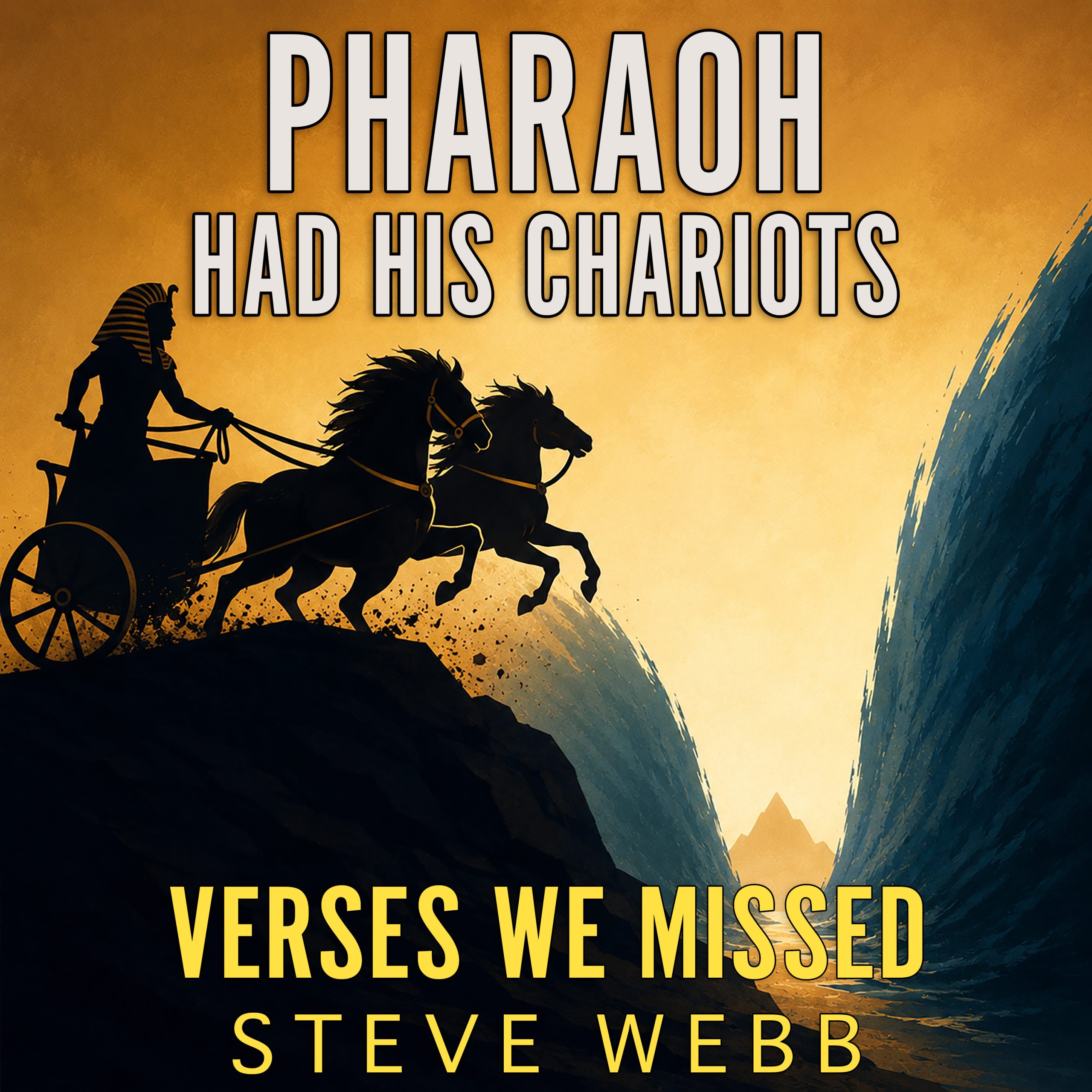
What does Psalm 20:7 mean? David says some trust in chariots and horses, but God’s people trust in the name of the LORD. Why does that matter?
In this episode of Verses We Missed, we explore Psalm 20:7 and discover why David’s reference to the name of Yahweh makes this familiar verse much richer. Along the way, we’ll see how Pharaoh’s horses and chariots, the Exodus, and God’s covenant faithfulness help us understand where our trust truly belongs. Browse more episodes at Recent Episodes.
Pharaoh Had His Chariots
Psalm 20:7 (ESV)
Psalm 20 is a prayer for the king as he prepares for battle. Then David gives us a contrast that believers have remembered for generations:
Psalm 20:7 (ESV)
“Some trust in chariots and some in horses, but we trust in the name of the LORD our God.”
At first glance, the meaning seems straightforward: don’t trust military strength; trust God. But David says something more specific. He says God’s people trust in the name of the LORD.
What Does Psalm 20:7 Mean?
Psalm 20:7 teaches that God’s people must not place their ultimate confidence in human strength, resources, or power. In David’s day, horses and chariots represented military might. They were the kinds of things a king could look at before battle and think, “We have enough. We’re strong enough. We can win.”
But David does not say that having horses or chariots is the problem. He says some people trust in them.
That’s an important distinction. The issue is not whether we have resources. The issue is whether those resources become the foundation of our security.
Why Does Psalm 20:7 Mention Chariots and Horses?
Psalm 20 is set in the context of battle, so horses and chariots are not random illustrations. They were powerful weapons of war and visible symbols of military strength.
Israel had already been warned about this danger. In Deuteronomy 17:16, Israel’s future kings were told not to multiply horses for themselves. A king surrounded by military power could slowly begin trusting the strength of Israel instead of the God of Israel.
Psalm 20:7 brings that temptation into focus. The question is not simply, “What resources do you have?” The deeper question is, “Where is your confidence?”
What Does “The Name of the LORD” Mean in Psalm 20:7?
The word LORD in many English Bibles appears in capital letters because it represents God’s covenant name, YHWH, commonly rendered Yahweh.
That takes us back to Exodus 3, where God revealed Himself to Moses at the burning bush. Moses asked what he should tell the Israelites if they asked the name of the God who sent him.
God’s answer was not merely a label. The name Yahweh was connected with who He had revealed Himself to be: the God of Abraham, Isaac, and Jacob; the God who heard the cries of His people; the God who remembered His covenant; and the God who came to deliver them.
So when David says, “we trust in the name of the LORD our God,” he is pointing to God’s revealed character, faithfulness, promises, and saving acts.
Psalm 20:7 Explained in One Sentence
Psalm 20:7 teaches that our ultimate security must rest not in human power or resources, but in Yahweh’s revealed character, faithfulness, and saving power.
What Do Pharaoh’s Chariots Have to Do With Psalm 20:7?
For Israel, horses and chariots carried a powerful historical memory.
When Pharaoh changed his mind and pursued the Israelites after their escape from Egypt, Exodus 14 describes his army in terms of horses, horsemen, and chariots.
Israel appeared trapped. The sea was in front of them. Pharaoh’s army was behind them. From a human point of view, Pharaoh had every advantage.
Pharaoh had the army. Pharaoh had the horses. Pharaoh had the chariots.
Israel had Yahweh.
And God delivered His people.
We cannot say that every Israelite who sang Psalm 20:7 consciously thought of Exodus 14. But for a people whose national story centered on Yahweh delivering them from Pharaoh’s horses and chariots, the connection would have been difficult to miss.
Pharaoh had his chariots. Israel had Yahweh. And we know how that turned out.
Why Is Knowing God’s Name Connected With Trust?
Psalm 9:10 makes the connection especially clear: those who know God’s name put their trust in Him.
There is a relationship between knowing and trusting. The more we understand God’s character, the more reason we have to trust Him.
Faith is not simply trying harder to feel confident. Biblical trust grows as we learn who God is, remember what He has done, and take seriously what He has revealed about Himself in Scripture.
And above all, Christians look to Jesus. The God who revealed Himself to Moses has revealed Himself supremely in His Son. At the cross and resurrection, we see that God did not leave us trapped and helpless in our greatest need.
What Are the Chariots in Our Lives?
Most of us do not have literal chariots parked in the driveway, but we have plenty of things that can become chariots.
Money is not evil. Saving for retirement is not evil. Insurance is not evil. Going to a doctor is not a failure of faith. A good job, technology, capable people, and careful planning can all be gifts from God.
But a gift from God makes a terrible substitute for God.
One way to identify a modern chariot is to ask: when something frightening happens, where does my mind go first for security?
When the doctor calls with bad news, the company announces layoffs, an unexpected bill arrives, or a relationship begins to fall apart, what makes us think, “As long as I still have that, I’ll be okay”?
That may be our chariot.
How Can We Trust God More?
Psalm 9:10 points us toward the answer: get to know Him.
Learn His character. Read what He has revealed about Himself in His Word. Remember His faithfulness. Remember His promises. Remember what He has already done.
And look to Jesus.
We rarely know exactly what God is going to do in a difficult situation. Psalm 20:7 does not promise that Christians will never suffer, lose jobs, become sick, or face circumstances they cannot control.
But we can trust God even when we do not know the outcome because we know His character.
Related Scriptures
- Psalm 9:10 — Knowing God’s name is directly connected with trusting Him.
- Deuteronomy 17:16 — Israel’s kings were warned against multiplying horses and allowing military strength to become a substitute for dependence on God.
- Exodus 14 — Pharaoh pursued Israel with horses and chariots, but Yahweh delivered His people at the sea.
- Exodus 15 — Israel’s song of deliverance celebrates God’s victory over Pharaoh’s horses and chariots.
Podcast Chapters
- 00:00 Pharaoh Had His Chariots
- 00:59 Welcome to Verses We Missed
- 01:57 Psalm 20:7
- 02:17 A Prayer Before Battle
- 04:08 Trusting Chariots and Horses
- 06:11 The Name of Yahweh
- 07:12 God Reveals His Name
- 10:00 Knowing His Name Builds Trust
- 10:45 Pharaoh Had the Chariots
- 13:09 What Are Your Chariots?
- 16:18 How We Learn to Trust
- 18:01 Yahweh Does Not Change
- 19:46 Closing Prayer
- 21:06 Value for Value
- 23:08 What’s Your Chariot?
Support the Show
Verses We Missed is a value-for-value podcast. If this episode encouraged you, consider returning value in whatever way God puts on your heart—by praying for the ministry, sharing the episode with a friend, sending Steve a verse to consider, or supporting Lifespring! Media financially.
Learn more at https://lifespringmedia.com/support/.
More from Lifespring! Media
If you enjoy digging deeper into God’s Word, you might also enjoy these other podcasts and resources from Steve Webb:
- Lifespring! One Year Bible Rewind — Journey through the entire Bible with daily readings, commentary, and practical application.
- Lifespring! In Touch With God’s Character — Explore the names and character of God revealed in Scripture and what they teach us about the One we worship.
- Lifespring! — Bible teaching, Christian encouragement, interviews, and conversations designed to help you grow in your walk with Christ.